
Special Briefing Series: June 2025
Executive Summary
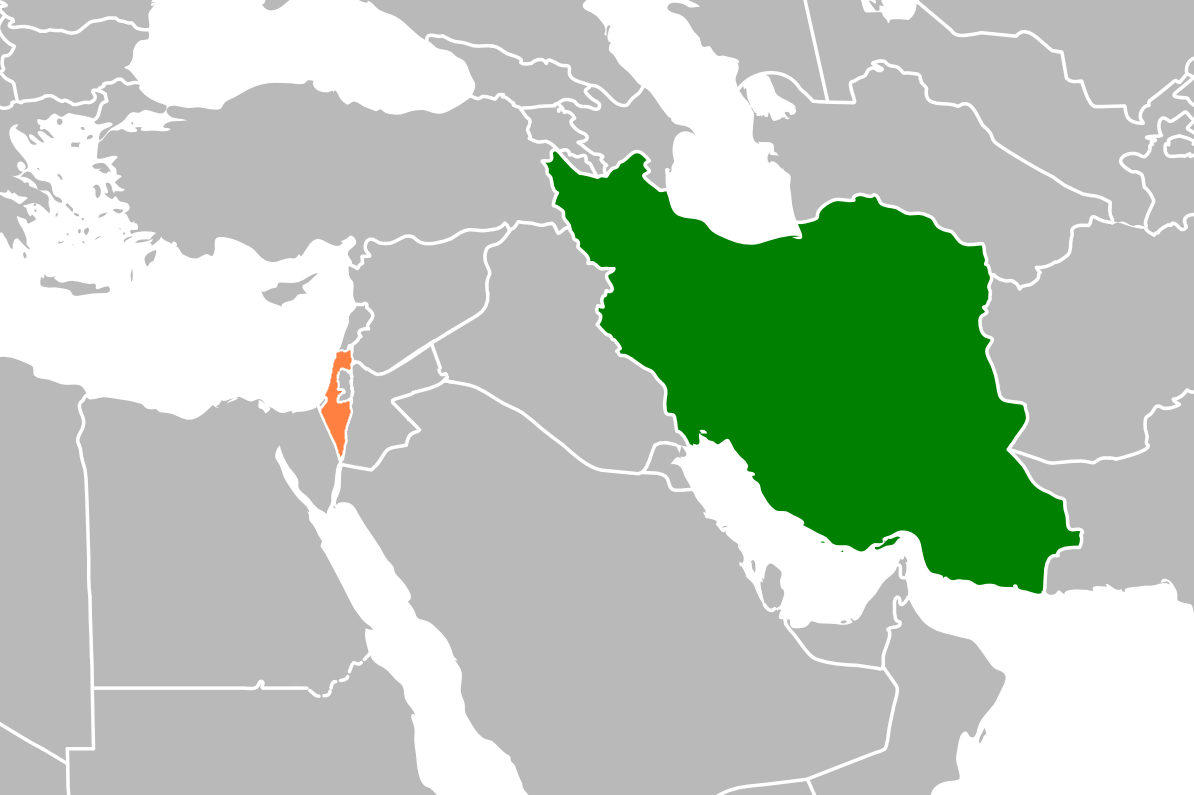
Despite backchannel diplomacy attempts and public calls for restraint, neither Iran nor Israel appears ready—or willing—to back down. Both sides have escalated, leaving no clear pathway toward de-escalation. Israel’s leadership has framed its military actions as necessary preemptive strikes against Iranian nuclear ambitions. In turn, Tehran sees Israel’s campaign as a direct existential threat—and expand its asymmetric retaliation across multiple theaters, including cyber, proxy forces, and strategic infrastructure targeting.
The ongoing confrontation between Iran and Israel is evolving into one of the region’s most destabilizing crises in over a decade. The Arab Gulf—positioned for years as a secure investment hub and transit corridor for global energy and trade—now faces an atmosphere of uncertainty. The longer this crisis continues, the greater the impact on the GCC’s business environment. The GCC’s stability premium is critical to its global appeal and a major selling point to attract international investment. GCC leaders are trying to preserve this posture, but the region’s image is under strain and could be undermined if the Gulf countries become targets. More specifically, if the Trump administration brings the U.S. into the conflict, this could result in reprisal attacks against GCC countries, especially those hosting U.S. forces, raising major risks for business and industry across the region.
No Off-Ramp in Sight
The crisis is unfolding without a safety net. Previous mechanisms—like the Oman nuclear talks—have either collapsed or lost credibility. European foreign ministers will meet their senior Iranian counterpart on Friday in Geneva as a last attempt at a diplomatic solution to de-escalate the solution. It is unlikely this track will shape Trump’s calculation. Meanwhile, Iran finds itself increasingly isolated, with few allies willing to intervene on its behalf. Israel, on the other hand, has retained some diplomatic cover following the initial strikes. But in the absence of real dialogue or mutually acceptable exit points, both sides are locked in a dangerous tit-for-tat cycle. That dynamic significantly increases the risk of spillover into neighboring states—particularly those in the Gulf.
Strategic Risk to the GCC Business Environment
The Gulf’s transformation from oil-dependent states to globally connected investment hubs has rested on one crucial narrative: stability. That narrative is now showing cracks. The immediate effects are already visible. Airspace restrictions are disrupting international travel, undermining the GCC’s role as a global aviation and logistics hub. Senior executives, tourists, and multinational firms are reassessing their ability to operate freely in regional capitals like Dubai, Riyadh, and Doha so long as the threat of a strike remains.
At sea, the situation is deteriorating. Access to the Bab el-Mandeb Strait and Red Sea shipping lanes is often one casualty of escalation with Iran. As seen with Houthi attacks on Red Sea shipping, maritime vessels and infrastructure can quickly become a target for escalation. This would force container ships to reroute and force insurance costs to climb. Gulf ports risk losing some degree of reliability.
But perhaps the most dangerous trigger point now looming is the Strait of Hormuz. Nearly 20% of the world’s oil passes through this narrow chokepoint, including the bulk of exports from Saudi Arabia, the UAE, Kuwait, Qatar, and Iraq. Any Iranian move to threaten or block the strait would constitute a red line—not just for the U.S., but for China, India, Europe, and Gulf states themselves. A closure would devastate oil markets, paralyze regional economies, and could trigger military action. It would also force countries like the UAE and Saudi Arabia to accelerate use of overland and Red Sea alternatives that are underdeveloped.
The strategic stakes around Hormuz are high. For Gulf leaders, the strait is not just an energy corridor—it’s a lifeline to the global economy. For Iran, threatening it may be one of the few levers of deterrence it still holds. For China and other major importers, any disruption would warrant serious recalibration of energy security and shipping strategies.
Risk of Escalation
Two questions now define the forward trajectory of this crisis:
- Will President Trump authorize direct U.S. military involvement in support of Israel?
- Will Israel escalate its campaign toward regime change in Iran?
President Trump’s recent threats make it clear that U.S. involvement is not just possible—it’s being actively considered. His administration’s strategic ambiguity—threatening force while avoiding full commitment—has only increased regional anxiety. Should the U.S. move to support Israeli strikes on Iranian nuclear facilities, there is a strong probability of Iranian retaliation across the Gulf.
Such retaliation could target GCC energy infrastructure, shipping corridors, gas fields, or American military installations scattered across the region. Iranian proxies may also strike civilian and commercial targets to disrupt the perception of safety in Gulf capitals. This would mark a return to the regional insecurity of the early 2010s, but in a far more interconnected and economically ambitious Gulf.
A further escalation—particularly if Israel attempts political decapitation of Iran’s leadership—would be catastrophic. Regime collapse in Tehran could trigger state fragmentation, unleash mass displacement, and destabilize neighboring Iraq and the Gulf. It would also shock global energy markets and force countries like China, which depends on Gulf oil, to reorient their regional posture. Closure of the Strait of Hormuz—long feared, now plausible—would bring the global economy to a near halt.
Considerations for those operating in the GCC
Economic Disruptions and Supply Chain Vulnerabilities: If the situation continues to worsen, international businesses will face serious economic challenges. One of the most immediate concerns is oil price volatility. Any disruption to the Strait of Hormuz—a key route for global oil exports—could drive energy prices sharply higher. This would raise costs for industries that depend heavily on fuel and energy, as well as for global shipping and transport.
Beyond energy prices, shipping disruptions in the Persian Gulf, Red Sea, or Arabian Sea—whether from rerouting, delays, or rising insurance premiums—would create major headaches for supply chains. Delayed shipments, higher freight costs, and blocked trade routes would especially hurt companies that rely on fast-moving global production networks. The result could be shortages of materials, missed delivery targets, and halted manufacturing.
Geopolitical uncertainty could also chill foreign investment in the region. Some international investors may delay or pull back entirely, and capital flight could follow if investors are convinced Gulf investment carries to much risk. Furthermore, significant stock market volatility in GCC exchanges could impact the valuation of regional assets and the sentiment of global investors. The tourism sector is also likely to take a hit if perceptions of insecurity grow, hurting hotels, airlines, and local service providers.
Across the board, companies will face rising insurance costs—covering everything from property and cargo to staff safety. This will squeeze profit margins and force many businesses to rethink how and where they operate.
Security and Operational Challenges: Companies in the region may face growing challenges to keep their operations running safely. One of the biggest risks is a surge in cyberattacks, especially those targeting vital infrastructure, banks, and large businesses. These attacks—some possibly backed by states—could lead to data breaches, theft of trade secrets, and major disruptions to business operations. Even if the core Gulf states aren’t directly targeted, the risk of spillover violence or proxy attacks remains high. This could affect key infrastructure and force companies to invest more in physical security.
A major concern is the safety of employees and their ability to move around the region. Businesses may need to activate or design emergency evacuation plans for international staff, which could temporarily halt operations. At the same time, new travel warnings or restrictions from governments could make it harder to hold in-person meetings, conduct site visits, or bring in new talent.
Reputational Damage and Erosion of Confidence: The Ukraine conflict showed how quickly a war can start and how long it can drag on. Operating in a conflict region carries substantial non-financial risks for international brands. A prolonged or intense conflict may damage the international perception of the GCC as a stable and attractive business hub, making it harder for international businesses to justify their presence to shareholders and customers. This is unlikely if there is a resolution to the conflict in the near-term, but the potential increases the longer the war drags on.
For tailored briefings, strategic risk assessments, or to explore how Rihla Research & Advisory LLC can support you, please visit us at Rihlaadvisory.com or by email at Jesse.Marks@rihlaadvisory.com.
